On Being Imaged
Tess Walker Elliott
The hand of Anna Bertha Ludwig was x-rayed in 1895. It was the first time a photograph
was able to reach beyond a surface, passing through human flesh and tissue to unveil aspects
of the body previously unimageable. Being inside or enclosed no longer equated to being
veiled and unseen. The ‘X’ or ‘unknown’ rays allowed one “to become transparent to
oneself.”2
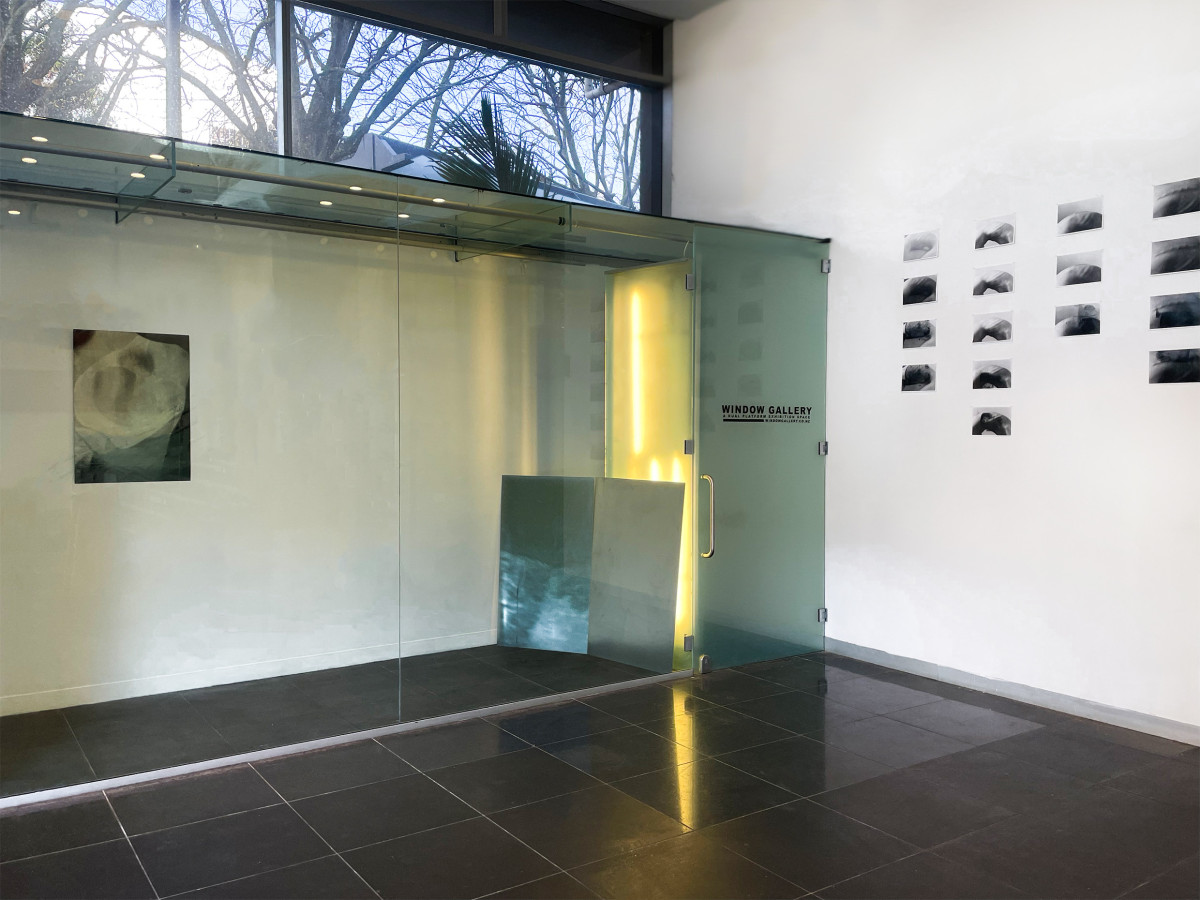
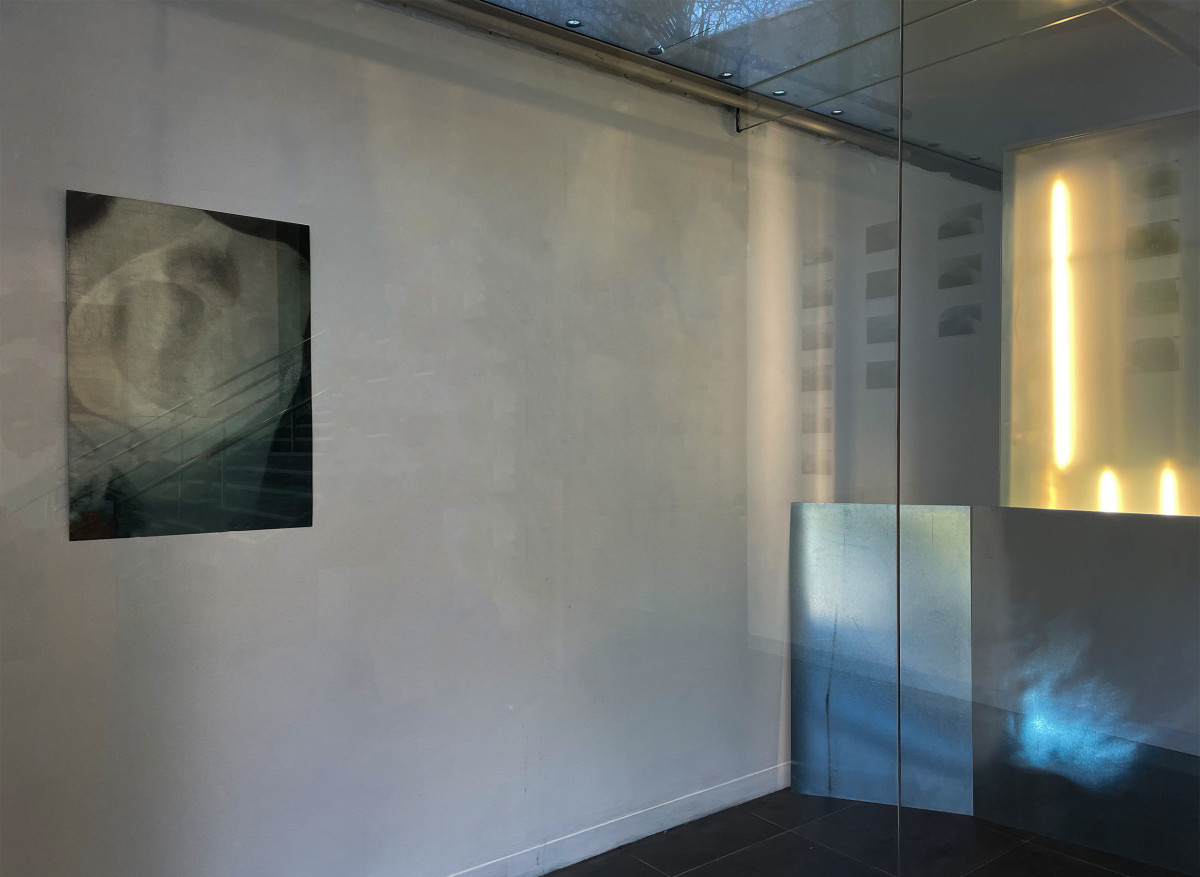
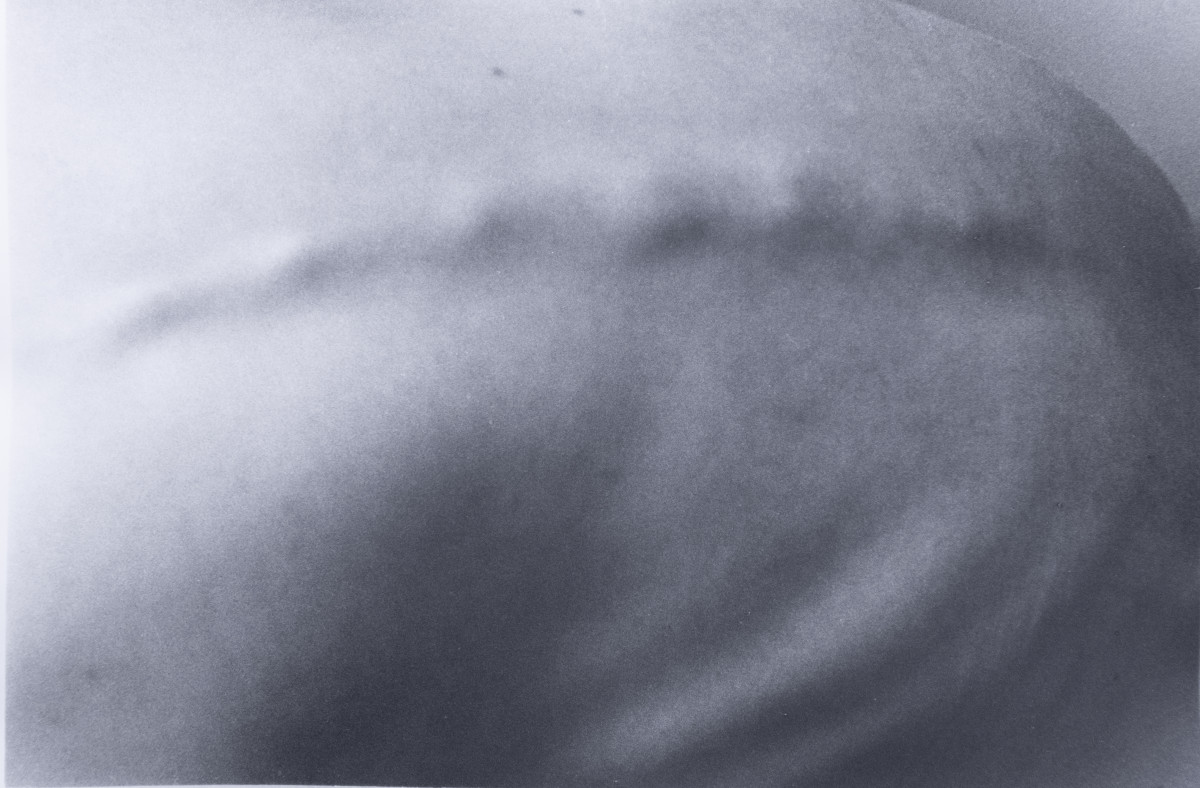
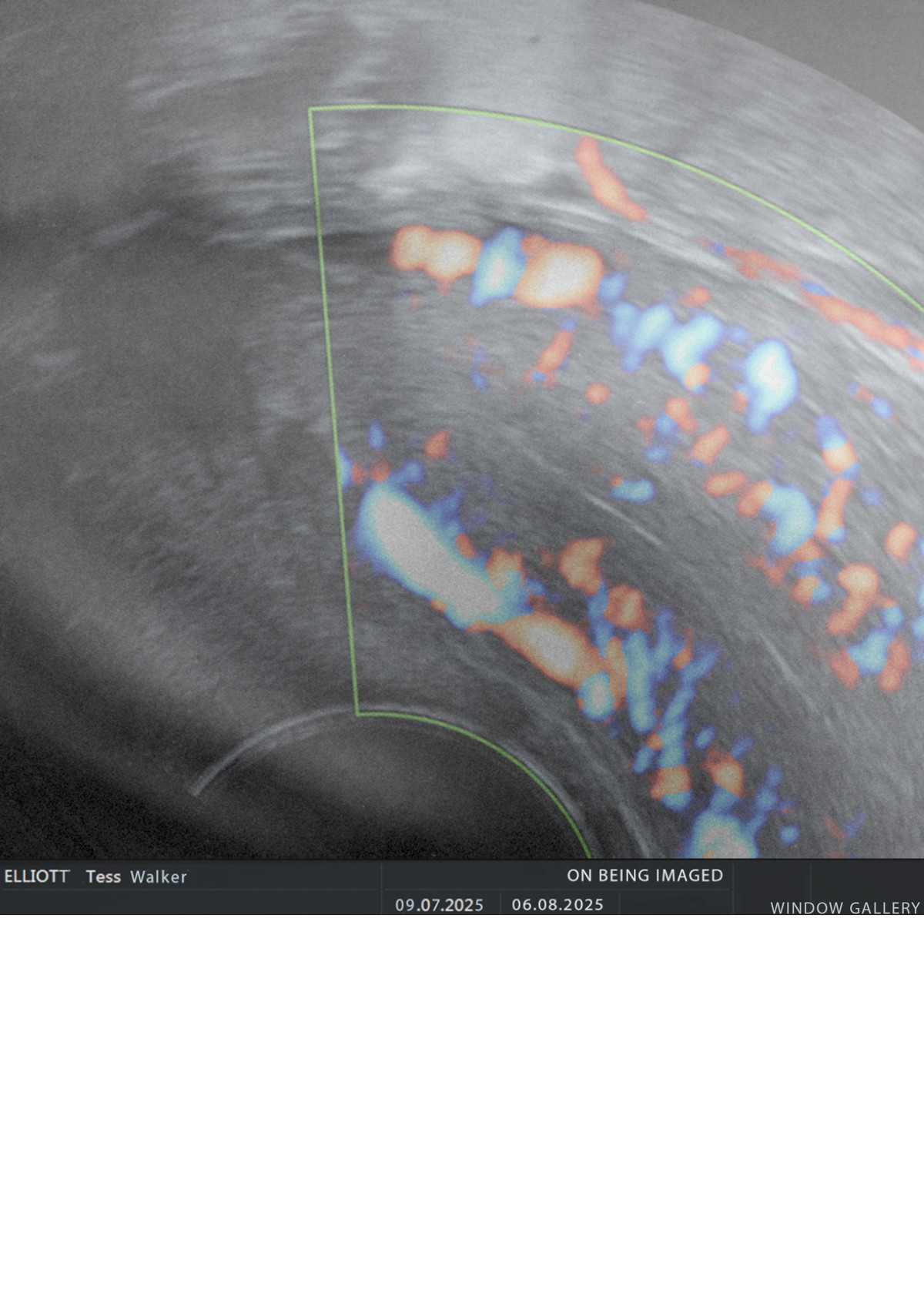
On being Imaged presents the reiterative re-imaging of the body using personal medical
archives and varied image-making methods. These methods engage with aspects of
transparency which are imperative to the production of the image/s evident in the practices of
darkroom printing, screen printing and projection which employ film negatives, meshed
screens and most importantly require light and, at times, its complete absence.
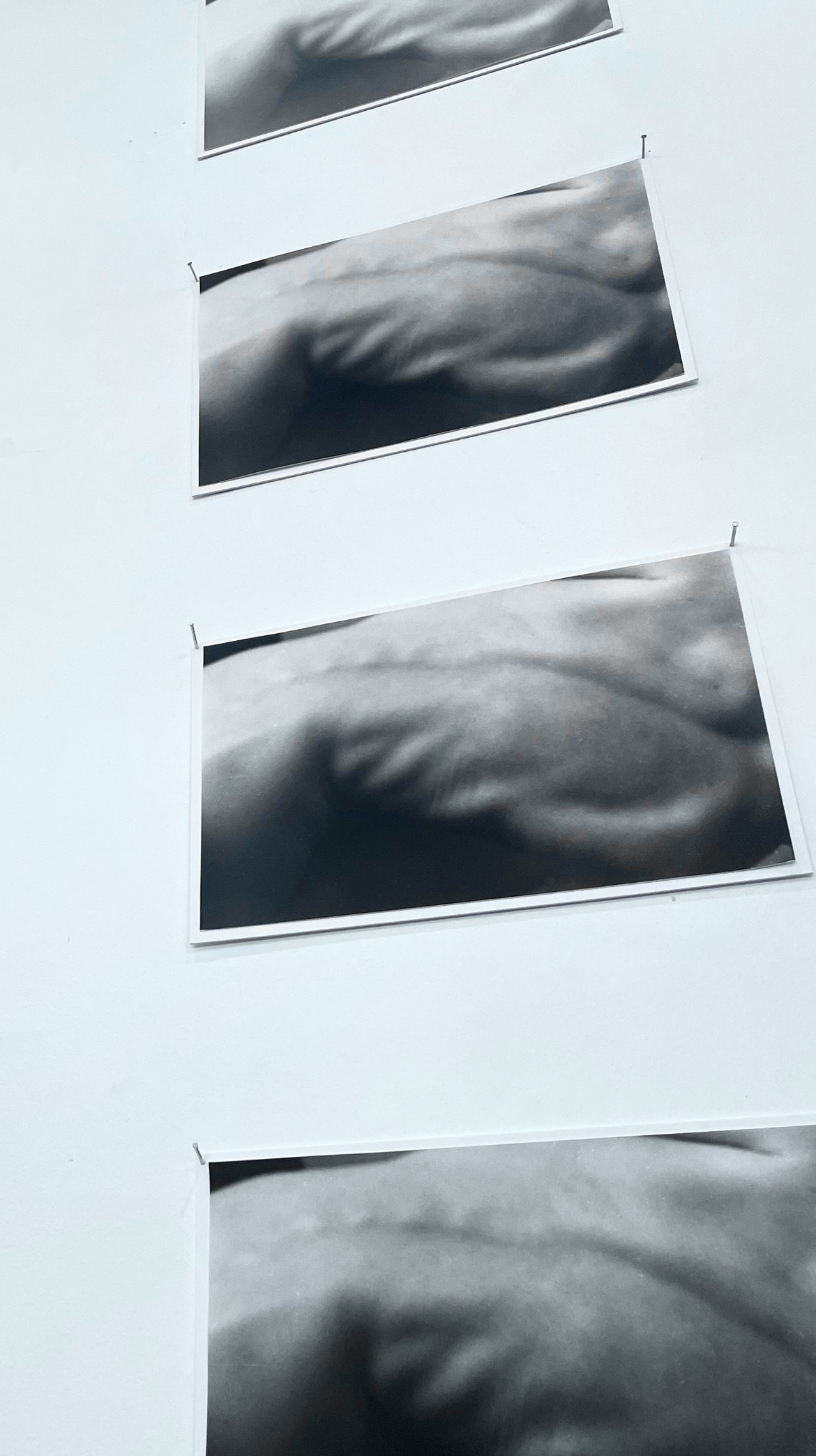
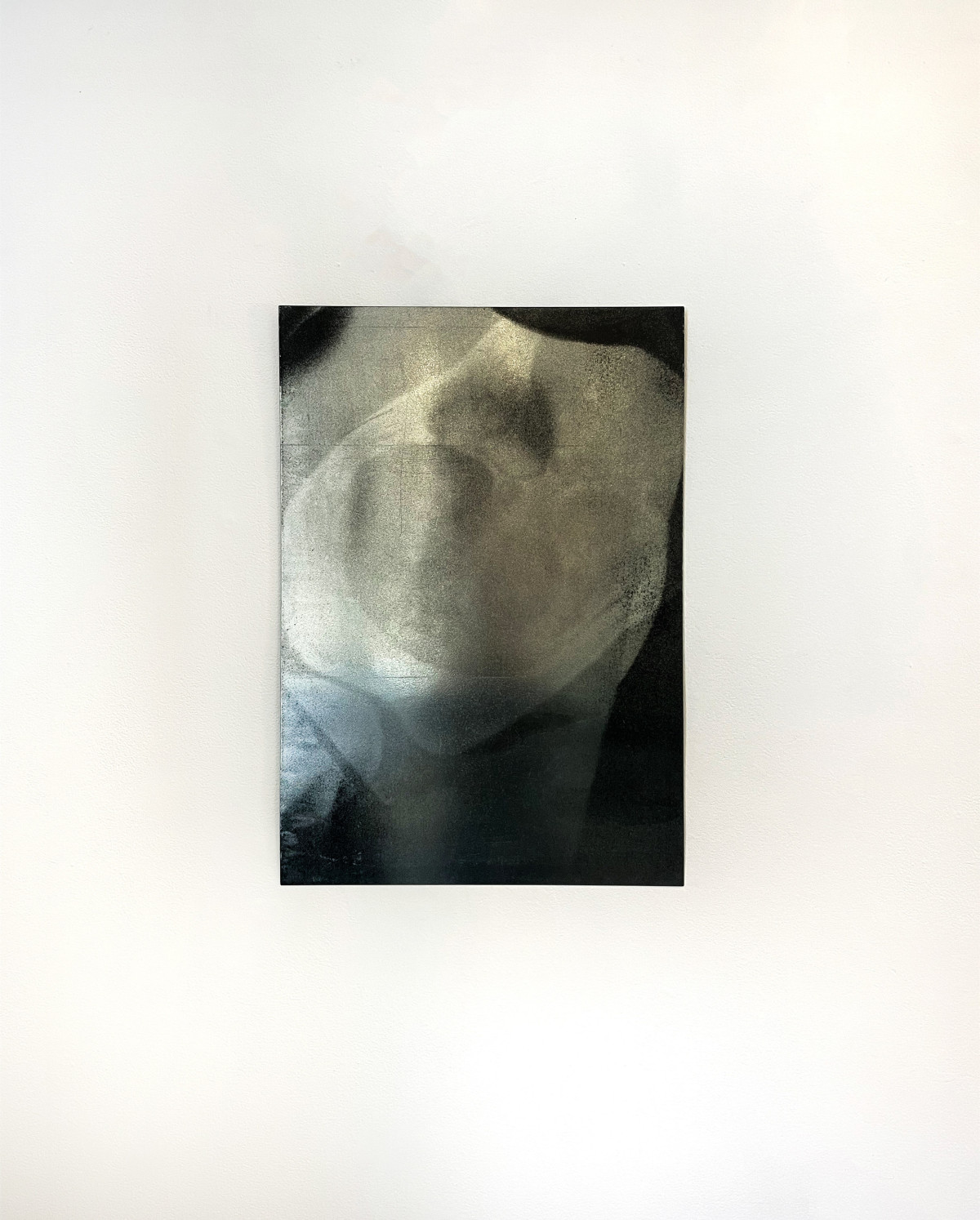
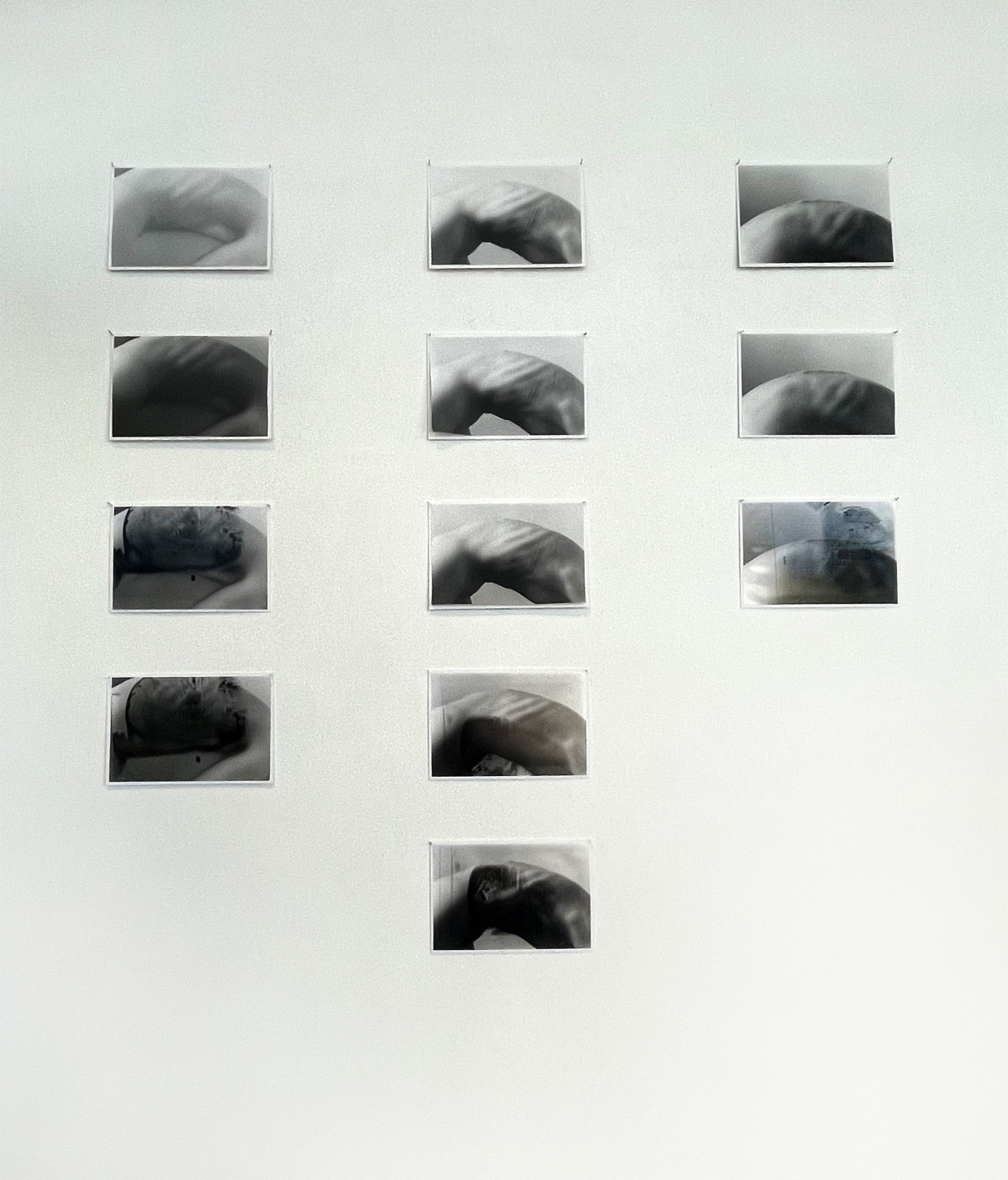
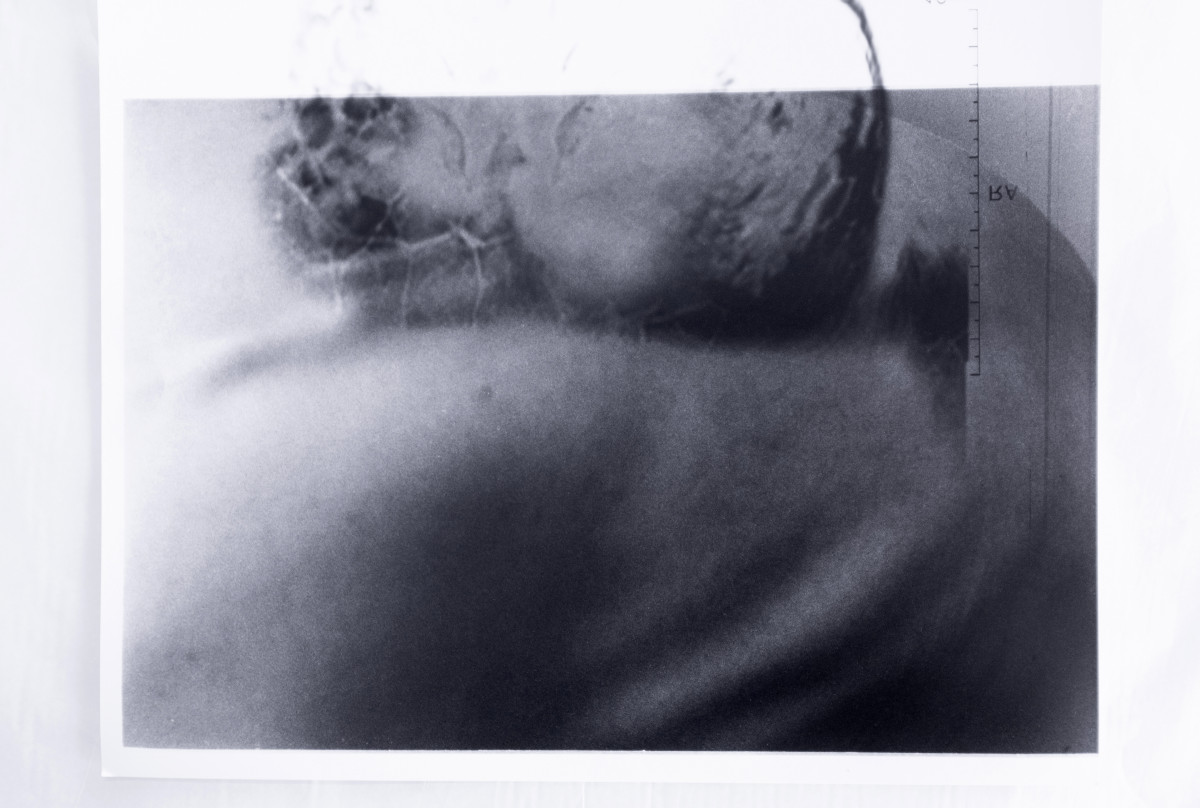
The x-rays, like a film negative, are removed from their archival state and are reintroduced to
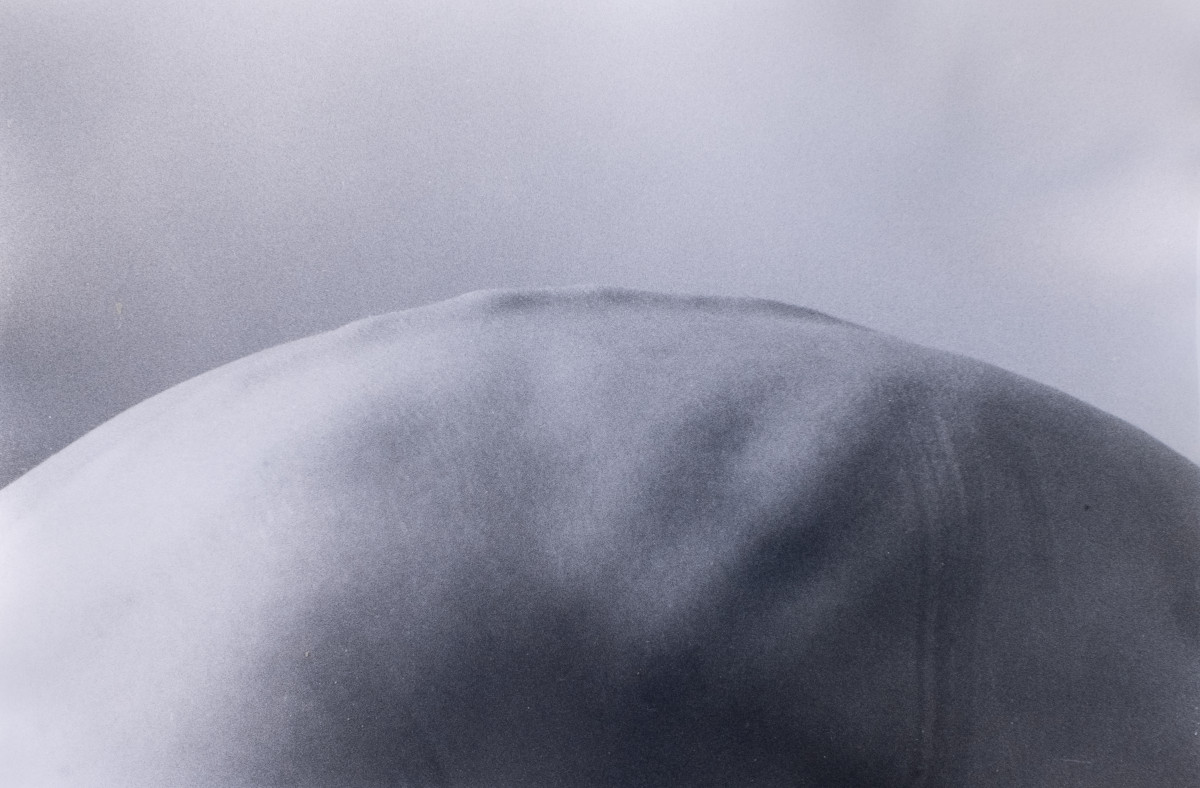
light through a darkroom enlarger. The body begins as an external physical depiction before
being exposed to an internal x-ray and then materialising as a silver gelatin print, the exterior
body overlaid and interrupted by its interior. Each imaging abstracts its form further from the
personal. Boyer uses the term ‘medicalized abstraction’3 stating that "radiology turns a person
made of feelings and flesh into a patient made of light and shadows"4
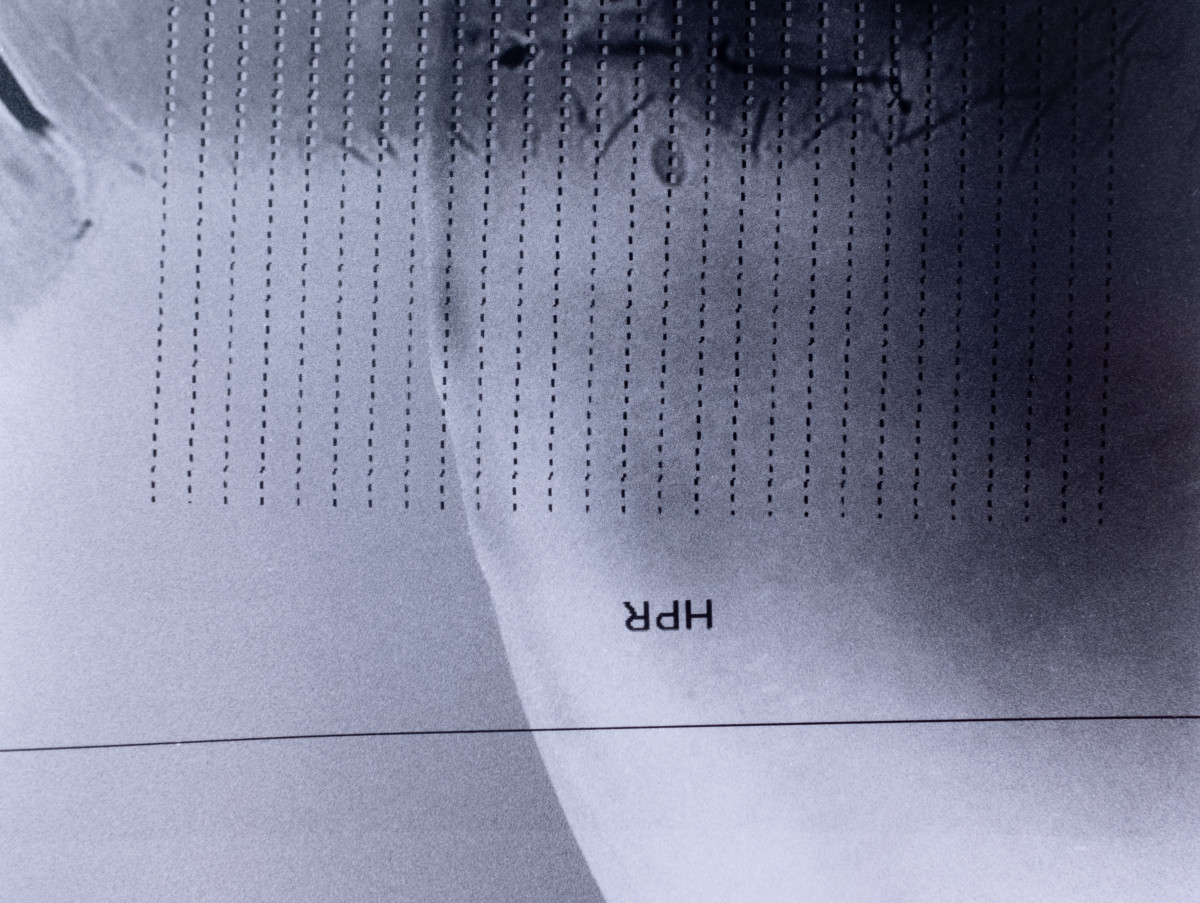
An x-ray sheet contains around twelve images of the body with each image differing slightly
from the last - an area of the x-ray expanding or disappearing, frame by frame. This sense of
movement is reminiscent of Muybridge’s motion studies which reframed photography as an
instrument for “annihilating time and space’.5 The personal archive of x-ray records reduces
the body to an accumulative statistic, while the concept of the body occupying space is made
futile.
Radiography collapses the body into a singular plane. Light rays, soundwaves and
photographic processes fracture and reduce the body to an image, flat and uninhabitable. The
body within this medical space becomes trapped in its representation by data and imaging;
corporeal autonomy dematerialises and the self becomes depersonalised. The body is now a non-body, a one-dimensional trace, a projected image.
1 X-rays were discovered by Wilhelm Conrad Röntgen,in Wurzburg, Germany in 1895. The first radiograph is pictured
above. https://collection.sciencemuseumgroup.org.uk/objects/co134691/photograph-of-a-radiograph-of-hand-taken-bywilhelm-
conrad-rontgen-germany-1895
2 Susan Sontag, Illness as a Metaphor, (Penguin Books, 1991), 13.
3 Anne Boyer, The Undying; a meditation on modern illness, (Penguin Books, 2020), 53.
4 Ibid, 15.
5 Rebecca Solnit, River of Shadows; Eadweard Muybridge and the technological wild west, (Penguin Books, 2004), 4.
Curatorial Response Text - Through The Night Side By Mia Foulds